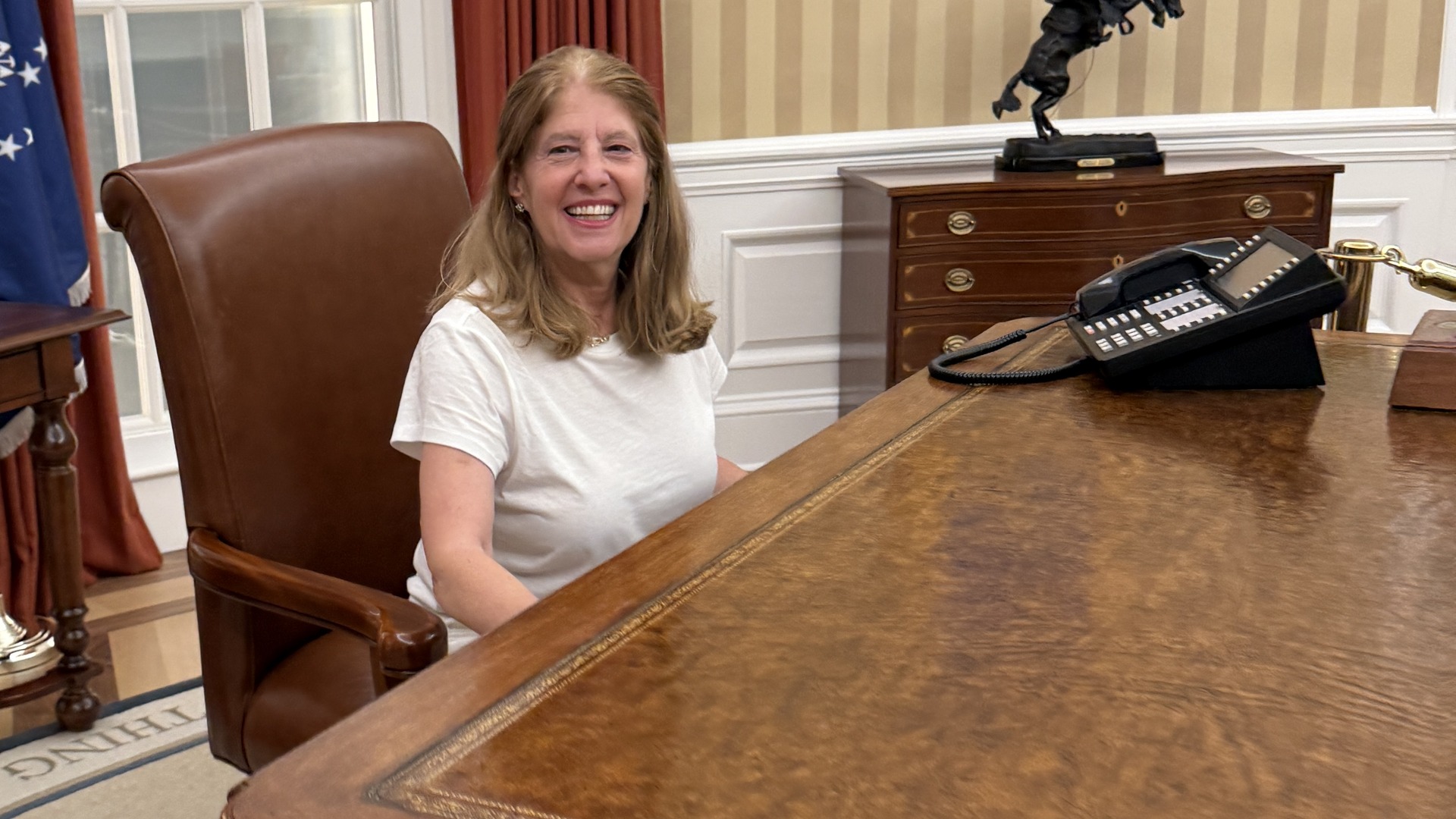

I sat on my hand.
I was in a room where candidates were talking about the rise of antisemitism. And what they said was missing the story. Missing the context. Missing the part that only comes from living it.
I have spent decades working in Jewish education, with the ADL, and with the President’s Commission on the Holocaust. I know this subject. I usually have the first hand in the air.
Me. The most outspoken person in almost every room I walk into.
And I said nothing.
I didn’t stay quiet because I had nothing to say. I stayed quiet because, in that moment, I didn’t feel like I could.
That’s been bothering me ever since.
Both sides of my family fled. My mom came straight from Vienna to America. My dad’s family took the long way: Czechoslovakia first, then Bath, England, then here. They were refugees from the Holocaust. My mom is almost 91 now and still travels with me. When she talks about leaving, she doesn’t talk about politics. She talks about what it was like to lose your home because of who you are.
I’m a first-generation American. When I see antisemitism rising, I don’t read it as a headline. It’s my family’s story knocking on the door again.
So this election season, with races here in New York and around the country so close a few thousand votes will decide them, I’m asking a question I’ve never asked out loud.
Should I tell you who I’m voting for?
For 30 years at BLI, the answer has been no. Politics and business stay separate. We come into your workplace to help your people, not to campaign.
But it’s never been that clean. Every bill that passes in Albany or Washington ends up on my desk. Workplace mental health requirements. Peer support funding. Rules for EAPs. Those laws shape what you need from me and how I run my company. In 2027 I’m making it my job to really learn them. Politics is already in my business. It’s in my inbox every week.
So first I asked: am I even allowed? We work with federal agencies. We’re going after state contracts. I did my homework, and here’s the short version. My company can’t give money to campaigns. I personally can vote, donate, and say what I think. And I would never require my team to sit through my opinions. They should never feel they have to agree with me to keep their job.
For a minute I thought I might have to fight for my right to speak.
Then I realized I already have it. Nobody took it away in that room. I did.
The question was never whether I can. It’s whether I should.
And that’s where I’m stuck, because I carry two lessons that don’t agree.
My family taught me that silence is dangerous. You don’t wait. You don’t assume someone else will say it. You speak up while it still matters.
My work taught me something else. For 30 years I’ve walked into rooms full of people who disagree with each other and helped them stay in the room. That’s what our elephant-in-the-room work is. Talking about death, divorce, money, race, and yes, politics. It only works if everyone in that room believes I haven’t already picked a side against them.
Both of those lessons are true. And that day, sitting on my hand, they were fighting inside me.
I don’t have the answer. So I’m coming into your living room and asking you.
Do you want to know where the CEOs you work with stand? Would it change how you feel about working with them? Have you ever sat on your hand when you knew you should have raised it?
Vote in the poll below. And if you’d rather not say it in public, I understand that better than anyone right now. Hit reply and tell me privately. I read every one.
Next time I’m in that room, I want to know whether my hand goes up.
With love and zero shortcuts,
Wendy


